In high-stakes corporate environments, the most common threat to success is not a lack of individual talent, but a breakdown in collective intelligence. When we ask "why is team building important?", we are really asking how an organisation can optimise its most expensive and volatile asset: its people.
At The Team Building Company, we view team building as a strategic intervention. It is the process of converting a group of high-performing individuals into a resilient, synchronised unit capable of navigating the modern hybrid workplace.
Team Building as an Operational Catalyst
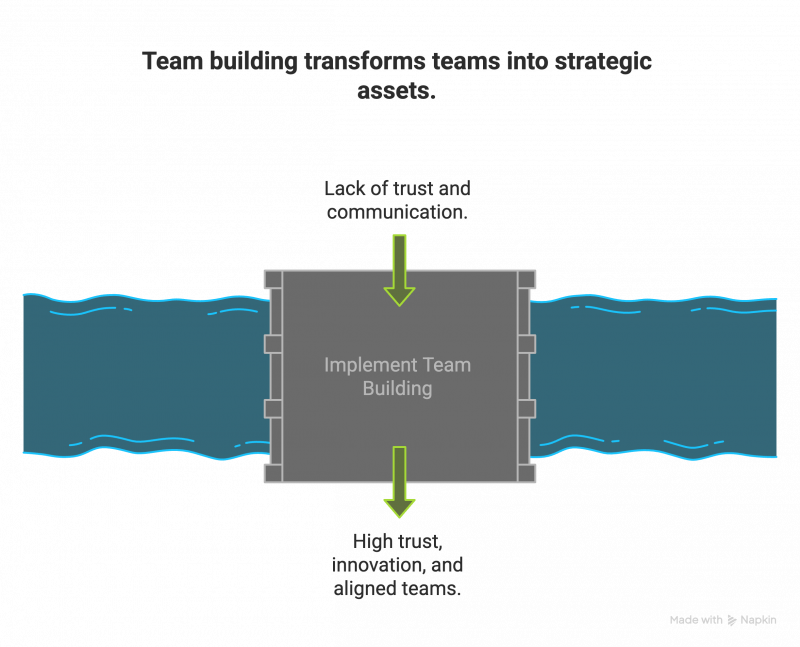
The fundamental hypothesis of strategic team building is that social friction is an invisible tax on productivity. When teams lack trust, communication becomes guarded, decision-making slows down, and "silos" begin to form between departments. Team-building interventions act as a catalyst to dissolve this friction. By removing the team from their habitual environment and placing them in a controlled, experiential learning scenario, we accelerate the journey from "Forming" to "Performing."
Strategic Advantage Is More Than Just a Social Outing
For the C-suite, the importance of team building is found in its ability to drive measurable business outcomes:
1. The Acceleration of Psychological Safety
According to Google’s "Project Aristotle," the number one predictor of team success is Psychological Safety—the belief that one can take risks without being shamed. Team building exercises provide a low-risk "laboratory" to build this trust. When a team successfully navigates a challenge like Saboteurs, they are practising the vulnerability-based trust required for honest debate in the boardroom.
2. Mitigating the 'Proximity Paradox'
In hybrid and remote models, "incidental communication" has vanished. Team building is now the primary tool for maintaining cultural alignment and preventing the erosion of brand affinity. It provides the high-impact physical touchpoints necessary to keep distributed teams feeling like a single entity.
3. Identifying 'Allowable Weaknesses'
Using frameworks like Belbin Team Roles, team building helps leaders identify the cognitive diversity of their group. It reveals who is the "Plant" (the innovator) and who is the "Monitor Evaluator" (the critic), ensuring that when the team returns to the office, roles are assigned based on genuine behavioural strengths rather than just job titles.
Putting Team Science into Practice
The importance of team building is only effective when the activity is mapped to a specific business challenge. We move away from generic "fun" and toward diagnostic experiences:
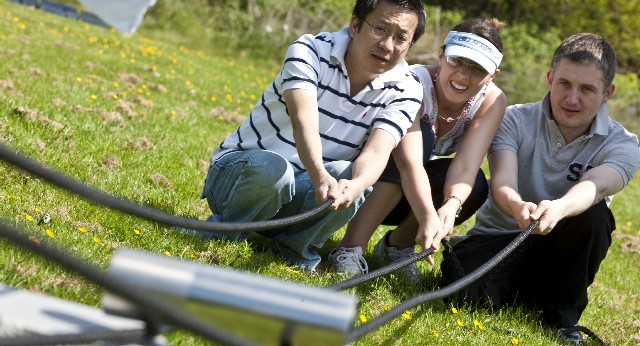
- To solve communication silos: We use events that require cross-departmental reliance, such as Together We Can.
- To sharpen tactical execution: We utilise high-pressure, time-sensitive challenges like The Ultimate Challenge.
- To rebuild empathy and trust: We facilitate Lifeline Sessions to create personal bonds that weather professional storms.
The Outcomes: A Tangible Return on Culture
When executed with professional facilitation, the outcomes of team building are quantifiable:
- Reduced Attrition: Higher employee engagement leads to significantly lower turnover costs.
- Faster Conflict Resolution: Teams that have "Stormed" successfully in an exercise spend less time in unproductive conflict at work.
- Improved Innovation: Safe-to-fail environments encourage the creative risk-taking necessary for market leadership.
Secure Your Strategic Advantage
Team building is not a reward for good performance; it is a prerequisite for it. By investing in the social architecture of your team, you are building the resilience required to thrive in a volatile market.
Ready to maximise your team's operational ROI?
Call our expert consultants on 01590 676599 or Request a Strategic Team Proposal.