Forming - Storming - Norming - Performing
Executive Summary - In the pursuit of operational excellence, understanding the lifecycle of a team is as critical as understanding the lifecycle of a product. Tuckman’s Stages of Group Development provides a definitive framework for identifying the developmental phase of any team. By recognising whether a team is currently Forming, Storming, Norming, or Performing, leadership can apply the correct interventions to minimise friction and maximise output. At The Team Building Company, we use this model to turn potential "Storming" into productive "Performing" through high-impact, time-compressed experiential learning.
Who is Bruce Tuckman?
Dr. Bruce Tuckman was a renowned American educational psychologist who published his landmark theory, "Developmental Sequence in Small Groups," in 1965. His work sought to categorise the behavioural patterns of teams as they move from initial assembly to project completion.
Originally consisting of four stages, Forming - Storming - Norming - Performing, Tuckman later added a fifth phase, Adjourning, in 1977 to address the psychological requirements of project closure. Today, his model remains the industry standard for organisational development and team coaching.
The 5 Stages of Development
1. Forming (Orientation)
The team is assembled, and the task is allocated. At this stage, members behave independently and prioritise social safety over task efficiency. While goodwill exists, there is a distinct lack of unconditional trust.
Leadership Focus: High direction. Clearly define the mission and establish initial norms.
2. Storming (Conflict)
This is the most critical and volatile phase. As the team addresses the task, competing ideas for ascendancy emerge. If managed poorly, this phase is destructive; if managed well, the "Cognitive Friction" leads to innovation.
Leadership Focus: Facilitative support. Addressing conflict directly to prevent the team from becoming stuck in a cycle of resentment.
3. Norming (Cohesion)
The team moves toward harmonious working practices. Rules, values, and "The Way We Do Things" are established. Trust begins to solidify as members accept the vital contributions of their peers.
Leadership Focus: Delegation. Encouraging individual responsibility as the team gains autonomy.
4. Performing (Execution)
The "Holy Grail" of team development. The team operates as a high-functioning unit with high levels of trust, autonomy, and competence. They navigate complex problems with minimal friction.
Leadership Focus: Monitoring and support. Ensuring the team doesn't become complacent.
5. Adjourning & Transforming (Closure)
The task is completed. This stage focuses on reflection, celebrating achievements, and managing the emotional transition as the team disbands or moves to a new challenge.

Strategic Application of Team Building
In a standard workplace, moving through these stages can take months or even years. Projects move slowly, and behavioural flaws are often hidden behind professional politeness.
Team building events act as a strategic time machine. By placing a team in a measurable, high-pressure environment for 4 to 8 hours, we force the team to navigate the entire Tuckman cycle in a single afternoon. This "Accelerated Growth" allows teams to observe their behaviours, fail safely, and calibrate their dynamics before returning to the high-stakes boardroom.
Applying Tuckman with Structured Team Building Events
We utilise specific activities to trigger and diagnose different stages of the model, allowing for an expert debrief that translates into dry-land results.
The Crystal Challenge
Tuckman’s stages
Forming, Storming, Norming, and Performing.
The premise of the event
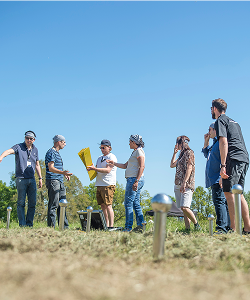
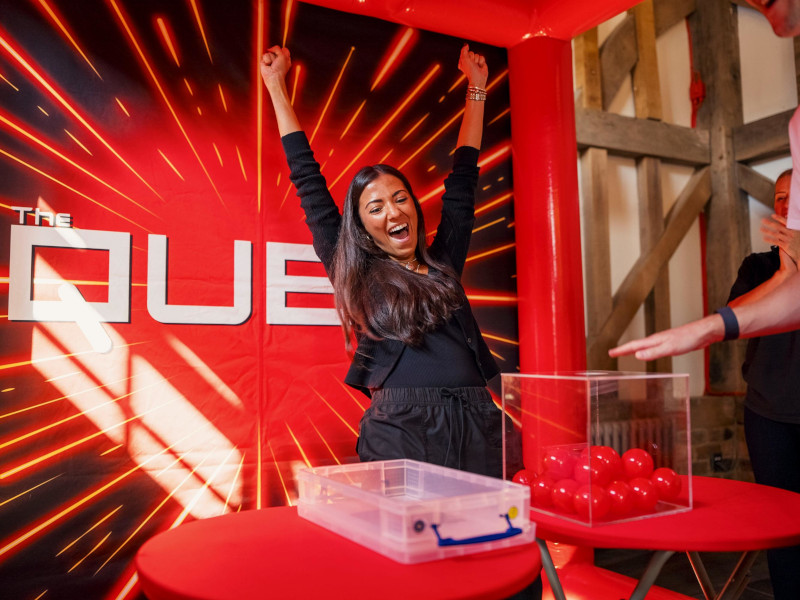
Based on the iconic television show, this event involves teams competing in several fast-paced mini games across four distinct zones: Mental, Physical, Skill, and Mystery. The ultimate objective is to win crystals that translate into time inside the Crystal Dome.
The dynamic
Because the tasks are short and varied, the team is forced to move through the Tuckman cycle multiple times in quick succession. During the Forming stage at each new game, participants must quickly assess the requirements. This leads into a rapid Storming phase as different ideas for the solution are debated under a ticking clock. The team moves into Norming as they recognise the specific strengths of their colleagues for each unique task, eventually reaching peak Performing as they work with total synchronicity inside the Crystal Dome to catch the gold tokens.
More on The Crystal Challenge event
Saboteurs
Tuckman’s stages
Storming and Norming.
The premise of the event
Inspired by the strategic deception of The Traitors, this event requires teams to complete a series of logic-based and physical challenges to build a prize pot. However, one or more members are secretly working as "Saboteurs" to undermine the team's efforts without being detected.
The dynamic
This event is designed to test the stability of a team's Norming phase. By introducing a "mole" into the group, we deliberately trigger a state of Storming where trust is questioned, and communication is scrutinised. To succeed, the team must navigate this conflict by establishing a more robust set of rules and values. This process demonstrates that true Norming is not just about being polite; it is about having the structures in place to maintain collaboration even when the psychological safety of the group is under threat.
More on The Saboteurs event
F1 Challenge
Tuckman’s stages
Forming, Storming, Norming, Performing, and Adjourning.
The premise of the event
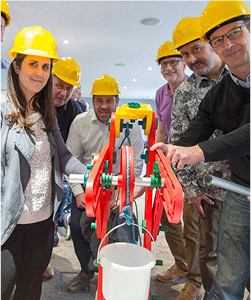
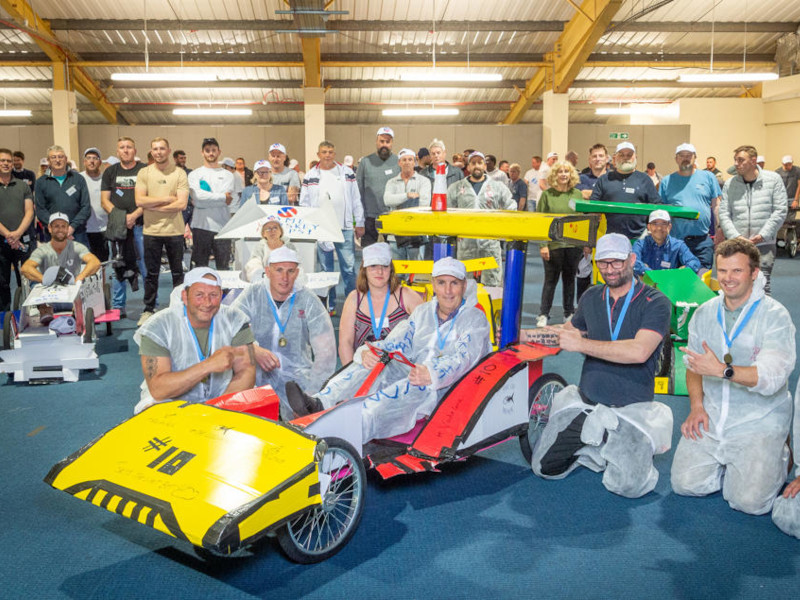
Teams are tasked with the design, construction, and eventual racing of a full-scale Formula 1 car. Using only cardboard and a set of technical plans, the group must create a functional vehicle that is both structurally sound and aesthetically branded.
The dynamic
The F1 Challenge provides a complete project lifecycle that perfectly mirrors the full Tuckman model. The Forming phase occurs during the initial design and blueprint review. As the physical construction begins, teams often enter a significant Storming phase as the reality of the engineering challenges sets in and different leadership styles emerge. Through our facilitation, the team reaches a Norming state as they divide the labour between the chassis, bodywork, and branding teams. The event culminates in the Performing stage during the final head-to-head race. Once the winner is declared, the Adjourning phase allows for a reflective debrief on how the team managed the transition from a pile of cardboard to a competitive racing machine.
More on The F1 Challenge event
Ready to accelerate your team's growth?
Call our expert facilitators on 01590 676599 or Request a Strategic Diagnostic Session.