Tuckman's Stages of Team Development
Bruce Tuckman's model, first developed in 1965, remains one of the most widely recognised team development theories. It describes the stages a team moves through from initial formation to project completion, and is particularly relevant to team building activities because these stages can be observed within a short, measurable timeframe.
The Four Stages (Plus One)
Forming
The team is assembled and the task is allocated. Team members tend to behave independently and, although goodwill may exist, they do not know each other well enough to unconditionally trust one another. Time is spent planning, collecting information and bonding.
Storming
The team starts to address the task and suggest ideas. Different ideas may compete for ascendancy, and if badly managed this phase can be destructive. Relationships between team members will be made or broken here, and some may never recover. In extreme cases, teams can become stuck in the Storming phase. If a team is too focused on consensus, they may decide on a less effective plan for the sake of harmony. Strong facilitative leadership is essential during this phase.
Norming
As the team moves out of Storming, they enter Norming - a shift towards harmonious working practices, with teams agreeing on the rules and values by which they operate. Teams begin to trust themselves as they accept the vital contribution of each member. Team leaders can take a step back as individual members take greater responsibility. The risk during Norming is that the team becomes complacent and loses their creative edge or drive.
Performing
The team is now functioning as a unit, working efficiently towards the task with minimal friction and maximum output.
Adjourning and Transforming
Tuckman later added a fifth phase to cover the finishing of a task and the dispersal or reformation of the team.
Tuckman's Theory in Practice
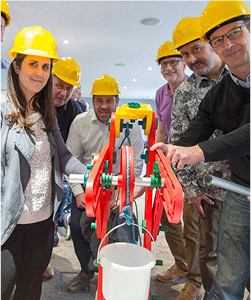
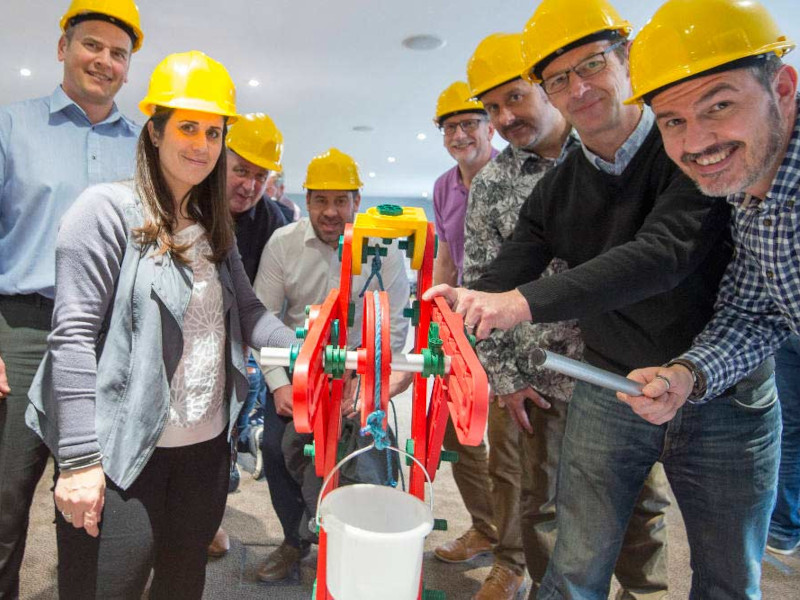
One of the most useful aspects of team building activities is that teams can observe their behaviour within a contained time frame. A perfect example is our Crystal Challenge.
- Forming: The team comes together and is given the task.
- Storming: All team members have their own view on the order. Leaders within the group tend to take control, but it is important that all views are listened to and acknowledged.
- Norming: Following discussion, the team naturally moves into Norming, with one or two members leading the discussion and putting forward suggestions based on general consensus.
This activity is based on effective communication, and as a general rule, all members of the group are fully engaged. Team building activities work well for explaining Tuckman's theory because the challenge is unfamiliar, forcing teams to quickly move through Storming and Norming in order to Perform.
Patrick Lencioni's Five Dysfunctions of a Team
Patrick Lencioni argues that teamwork remains the ultimate competitive advantage because it is both powerful and rare. High-performing teams are the cornerstone of healthy organisations, but many leaders fail because they allow one of five dysfunctions to take root:
- Absence of trust
- Fear of conflict
- Lack of commitment
- Avoidance of accountability
- Inattention to results
1. Absence of Trust
A team without trust is not really a team - it is a group of individuals achieving disappointing results. Trust gives a sense of safety and the confidence to be open about strengths and weaknesses. It is about exposing vulnerabilities, feeling comfortable when you have made a mistake, and acknowledging when someone is better at something than you. Vulnerability drives collaboration, creative thinking and open communication.
Ways to build trust:
- Personal history exercises allow teams to demonstrate vulnerability in a low-risk way, helping people relate on a personal level and become less judgmental.
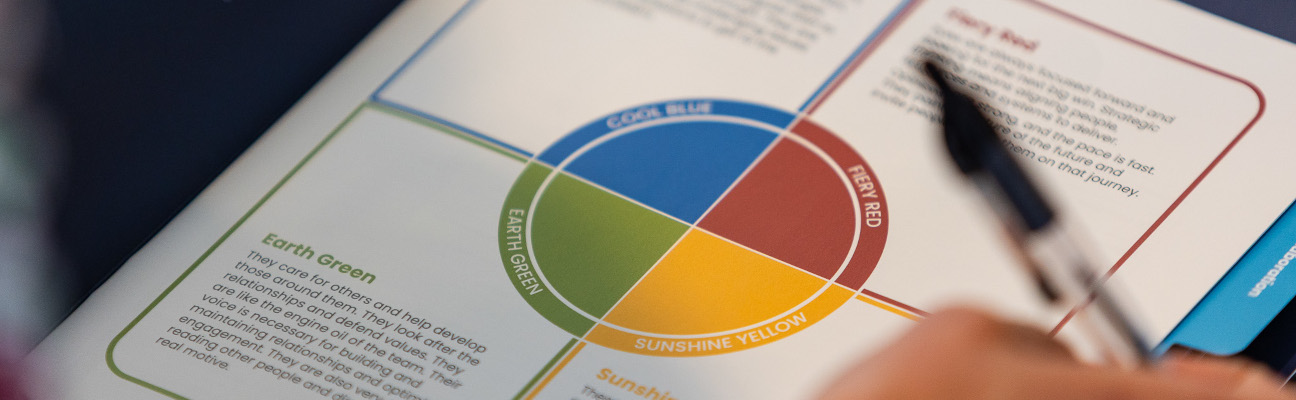
- Behavioural preferences tools, such as Insights Discovery, are effective ways to break down barriers and help people better understand and empathise with each other.
2. Fear of Conflict
There is a difference between healthy and unhealthy conflict. Healthy conflict moves a topic forward and focuses on solutions; unhealthy conflict is backwards-looking and centres on blame and judgment. Healthy conflict is essential for high-performing teams, but cannot take place without vulnerability and trust. When we avoid difficult conversations, issues fester and return as personal problems.
Tools for overcoming fear of conflict:
- Prepare yourself to be uncomfortable. Productive meetings are often difficult, uncomfortable and exhausting.
- Celebrate conflict in meetings. When an uncomfortable moment arises, interrupt the discussion and remind everyone that their contribution is valued.
- Understand behavioural preferences. Tools like Insights Discovery detail how you respond to conflict and provide tips on handling challenging conversations more effectively.
3. Lack of Commitment
Commitment is not about consensus. If you want commitment, you need to ask people what they think, but be clear that you will not necessarily adopt their suggestions. When all members feel welcome and believe they are allowed to express ideas and opinions, the team becomes more committed.
Leaders need to know how to get the best from each person. Extroverts may have four great ideas but give you ten that need sifting; introverts may have eight great ideas but only share three unless encouraged.
Andrew Grove at Intel popularised "Disagree and Commit" - the principle that while a decision is being considered, everyone can disagree and debate, but once a decision is reached, every team member must accept and commit to the outcome. Most people can support something they do not agree with, so long as they were heard and understand the "why" of the decision.
Tools for driving commitment:
- Written commitment: After debate, ask the team to write down their answer, then go around the room. Because they have written it down, they will be more committed.
- Know how each person makes decisions: Understand whether team members make instant decisions, require time to analyse, or are sensitive to the feelings of others.
4. Accountability
In a team situation, accountability is focused at the team rather than the individual. The most effective way of ensuring personal accountability is making sure commitment has taken place first. If someone did not buy into the decision in the first place, holding them accountable is difficult.
There are two forms of accountability - behavioural and performance. Behavioural accountability comes first. If you wait for the numbers, it is too late. As Lencioni says, "The behaviour precedes results."
Tools for developing accountability:
Lencioni recommends a team effectiveness exercise where team members identify for each colleague the one behaviour that enhances the team and the one behaviour that hurts the team. This provides powerful insight into how people are valued and what they might do differently. It is described as the cheapest and fastest 360-degree feedback you will ever do.
5. Inattention to Results
The challenge is not whether people are results-oriented, but whether they are focused on the organisation's results or their own. Is everyone more worried about their own needs or the collective results? It is about making sure the team functions like a football team rather than a golf team.
Tools for managing inattention to results:
Every team needs a thematic goal or rallying cry - one thing the organisation needs to achieve. Set the collective goal first, then look at how each department functions within that.
Using Team Building Exercises to Dispel the Five Dysfunctions
Any team building event that make a team focus on the following areas will help overcome obstacles raised through Lencioni's Five Dysfunctions of a Team: Connection, Debate, Alignment, Standardisation, and Focus. However, a great example would be one of our Treasure Hunts, as the team builds trust through a vulnerability-based skills briefing before using a high-stakes route-planning session to practice healthy conflict. They secure commitment by explicitly signing off on a unified strategy, which empowers them to maintain accountability by calling out distractions in real-time as they track their progress on the live GPS leaderboard. Ultimately, this shifts the focus from individual egos to the collective results of the final score, proving that alignment and peer-to-peer feedback are the primary drivers of team success.
Belbin's Team Roles
Meredith Belbin's research identified nine team roles that contribute to effective team performance. Understanding the natural roles people gravitate towards can help teams function more smoothly and identify gaps in capability.
Myers-Briggs Type Indicator (MBTI)
The Myers-Briggs Type Indicator is a widely used psychometric tool that categorises personality types based on four dichotomies: Extraversion/Introversion, Sensing/Intuition, Thinking/Feeling, and Judging/Perceiving. Understanding personality preferences helps teams communicate more effectively and appreciate different working styles.
Using Team Building to Help Identify Team Roles
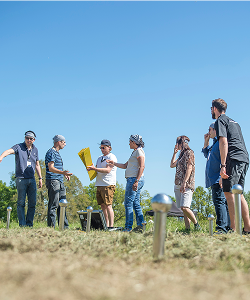
Events like Country Sports or The Ultimate Challenge allow for the identification of Team Roles as they force the team to move from a group of individuals doing "fun tasks" to a balanced machine that understands its roles and overcomes behavioural hurdles to maximise their score.
Icebreakers and Team Formation
Icebreaker activities are rapid, energetic experiences designed to break the ice at conferences or meetings. They break down barriers within a group, helping people feel more comfortable, energised and receptive to the day ahead. Effective icebreakers include physical challenges, treasure hunts, creative tasks and shared experiences that give teams a common reference point and help new groups form quickly.
How Team Building Theory Informs Practice
Understanding these theories helps us design activities that target specific team challenges. Whether you need to build trust in a newly formed team (Tuckman's Forming stage), encourage healthy debate (Lencioni's Fear of Conflict), or clarify roles and responsibilities (Belbin), the right activity at the right time can accelerate team development and create lasting behaviour change.
Our facilitated team building events are designed with these frameworks in mind, giving teams the opportunity to experience theory in practice, reflect on their behaviour and take practical steps to improve performance back at work.
Contact us today to book a team building event today.
Contact Us