
Nationwide: 020 3822 0600
Indoor
Rollercoaster


Overview
Thrills, Spills and Teambuilds...
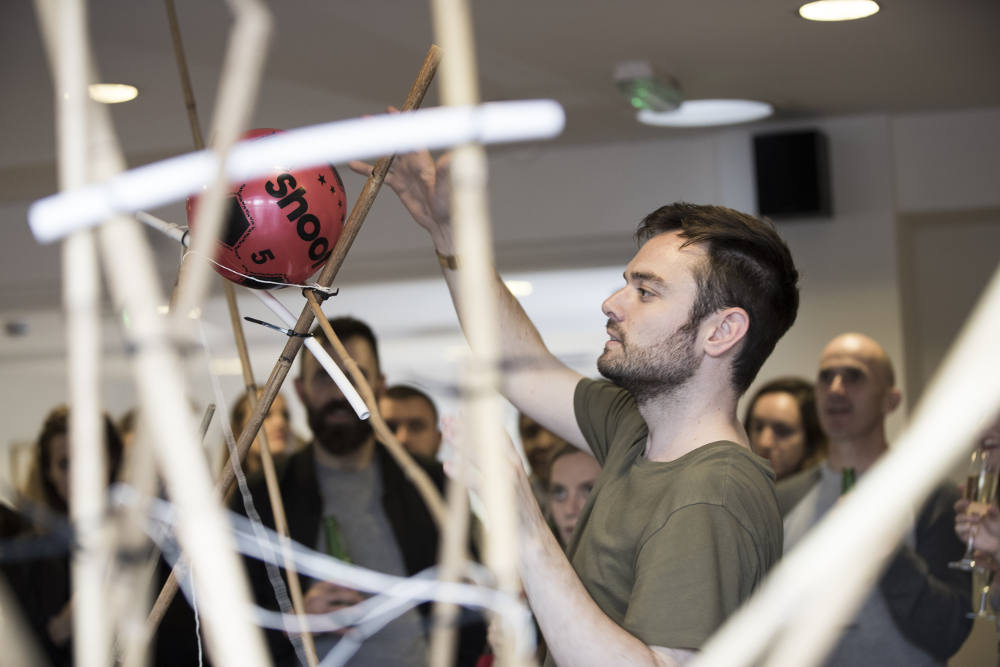
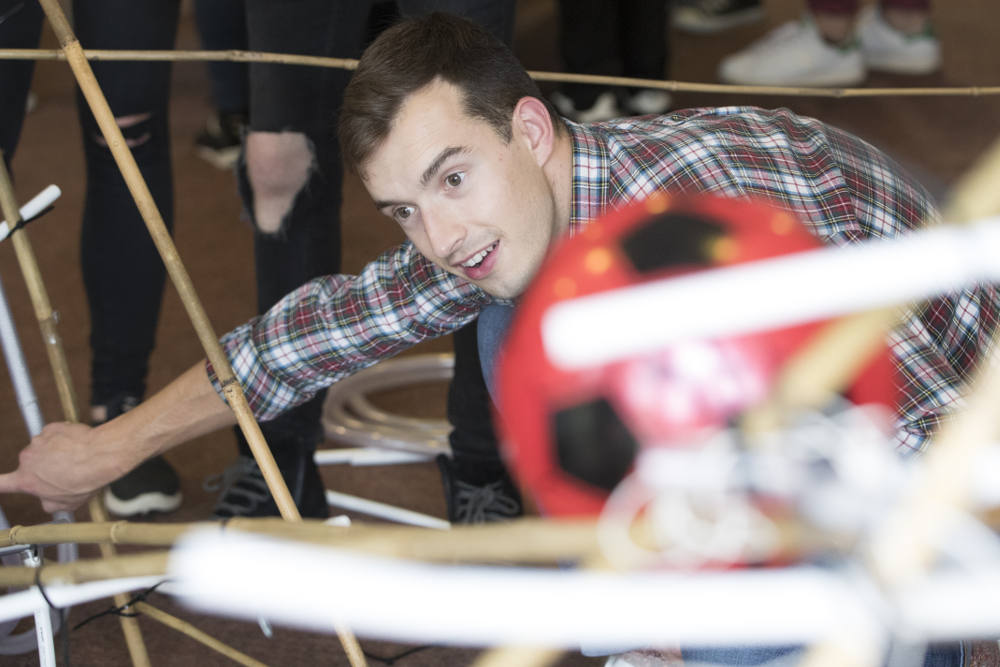
The challenge is for teams to work together to design and build a rollercoaster which transports a football along its entire length propelled only by gravity!
The ball must roll unaided from the start to the end of your rollercoaster. Bonus points for unnecessary engineering jumps, twists or even a loop the loop into the crazy structure.
Our Rollercoaster challenge is a great team building event for groups of all sizes but with a huge group the event becomes quite a spectacle.
You will need plenty of space; it is surprising how quickly the structure grows. This event quickly combines the logical and creative strengths of participants in a massive coordinated team building challenge that is fantastic fun.
About
The Event Format
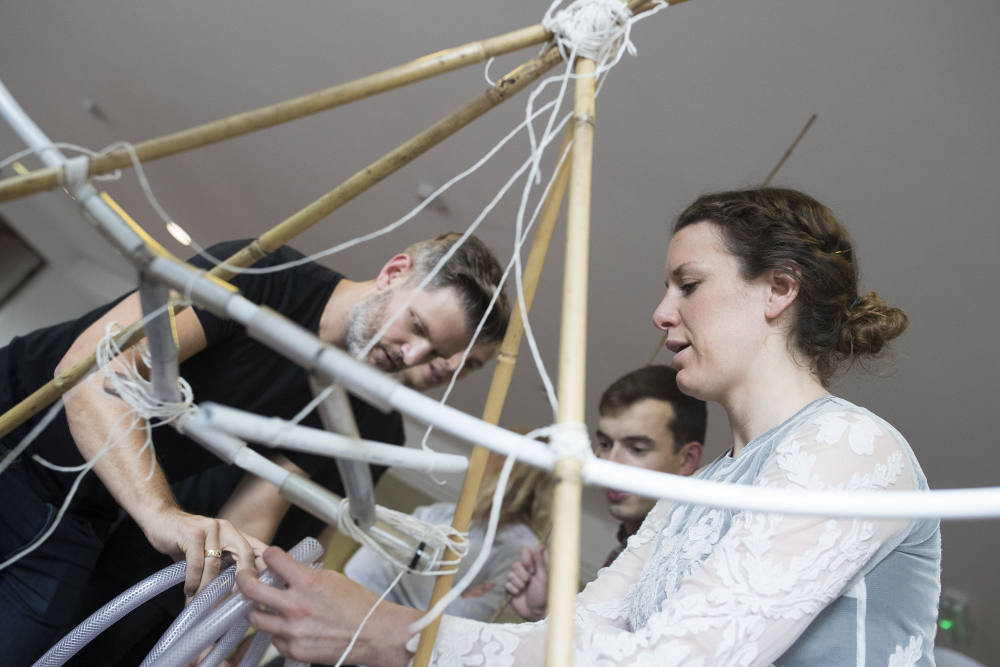
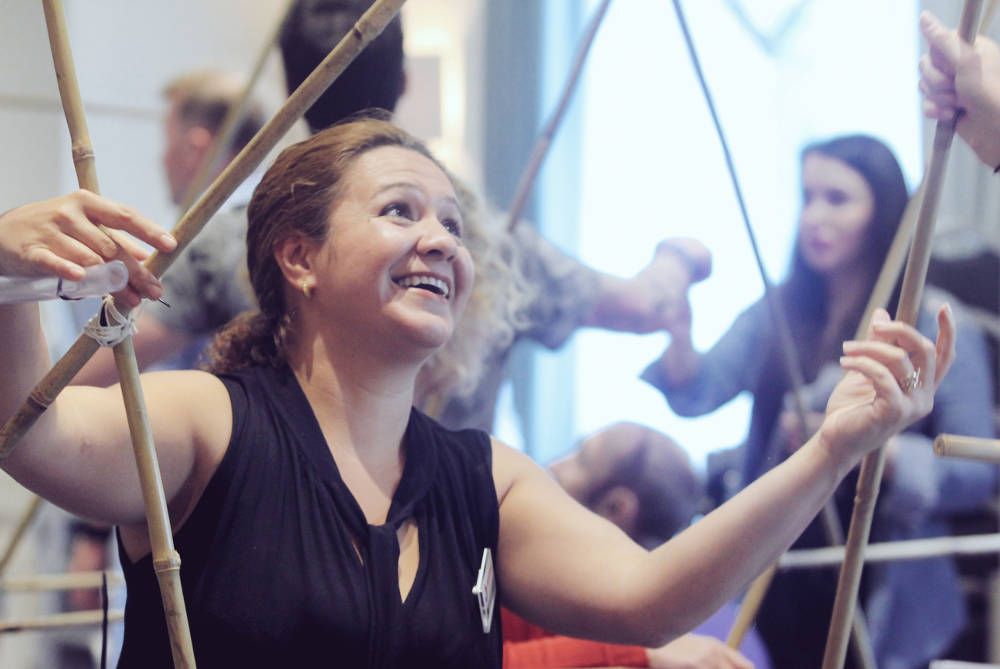
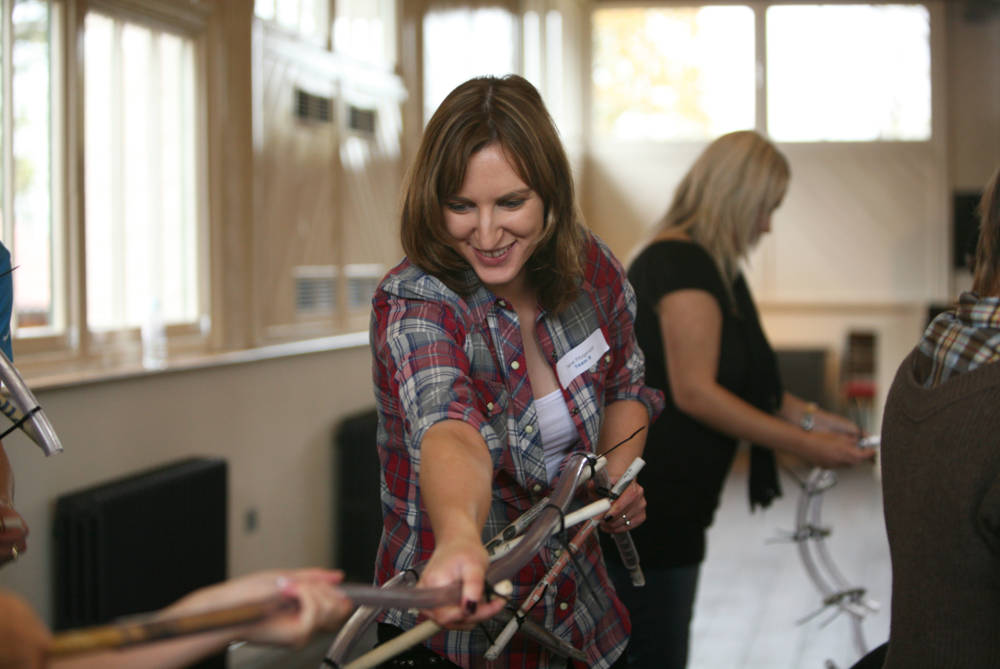
The group will be split into teams; each team is tasked with building a section of the track using bamboo canes, plastic tubing, cable ties and string.
Teams need to be organised and communicate well to ensure their individual sections line up for a seamless transition. Bonus points are awarded for 'design flourishes'; can you succeed where many have failed and complete a loop the loop?!
Once complete, your group is allowed one test run where they can make any changes before the Grand Finale. As the ball starts its journey, the excitement and noise starts to build as the ball travels 2 metres...down a spiral...4 metres...over a gap...5 metres...the tension is unbearable, the cheering unstoppable, and then...successfully loops the loop!
1 of 9
About
More Details
This event provides great team building – this exercise is good fun with elements of planning, communication and creativity. This is also available as an outdoor event.
For more than 25 years we’ve run our corporate events at hundreds of venues across the UK. We can, therefore, suggest a great venue near you for our Rollercoaster Challenge, alternatively we may be able to set up in your offices.
How it works
How does Rollercoaster work?
Rollercoaster is a team building event for 10 to 450 people, where teams each build a section of a giant gravity-powered track that must carry a football from start to finish. It lasts 2 to 3 hours. Here's how it runs.
-
Split into teams
Your group is split into teams, and each team is given a section of track to build plus all the materials it needs.
-
Design and build
Teams design and build their section, adding jumps, twists and loop-the-loops for bonus points.
-
Line it up
Teams have to organise and communicate well so every section lines up for a seamless transition.
-
The test run
Once the track is complete, the group gets one test run to make any changes.
-
The grand finale
The ball is released, and everyone watches to see if it rolls unaided from start to finish.
What's included
What's included with Rollercoaster?
Rollercoaster includes all the equipment for your track.
-
All Rollercoaster equipment
-
Event management and instruction
Optional extras
-
+
Event photography or filming
-
+
Upgraded prizes: champagne, chocolates or trophies
Benefits
What are the benefits of Rollercoaster?
Rollercoaster combines logic and creativity in a massive coordinated challenge that builds team cohesion for groups of any size.
-

Innovate
Teams engineer their own solutions, from jumps to loop-the-loops.
-

Energise
With a big group, the build becomes quite a spectacle.
-

Broad appeal
Logical and creative thinkers can both play a key role.
-

Team cohesion
The track only works if every team's section lines up with the next.

The Rollercoaster Challenge was great! Everyone really enjoyed it and I’ve had a lot of people comment on how fun it was. I think everyone appreciated the fact that the ‘teams’ were working together rather than competing against each other, and that the challenge involved multiple skills such as creativity, planning, practical skills, and refinement.
UCB
FAQs
Rollercoaster: Frequently Asked Questions
Teams design and construct sections of one enormous rollercoaster that must carry a football from beginning to end using gravity alone. Every section needs to connect correctly for the final run to succeed.
The track is created from simple construction materials such as bamboo canes, plastic tubing, cable ties and string. The limited materials encourage teams to test ideas and solve structural problems creatively.
No. Each team builds one section of the overall structure. The separate groups must therefore share measurements and design information so the football can move cleanly from one section to the next.
Yes. Bonus points can reward ambitious design flourishes such as jumps, twists, spirals or even a loop-the-loop. However, creativity still needs to serve the main objective: carrying the ball to the finish.
The group receives one test run before the grand finale. Teams need to observe where the ball slows, jumps the track or meets a poor connection, then agree which changes offer the best chance of success.
The football is released at the start of the completed structure and must travel unaided through every team's section. Excitement builds as it clears each connection, particularly if the group has attempted ambitious features.
No. Logical thinkers may enjoy the structural problem, but creative designers, practical builders, testers and communicators are equally valuable. The challenge is designed around experimentation rather than specialist engineering knowledge.
A substantial indoor room is recommended because the structure can grow quickly, especially with a large group. Suitable UK venues or office spaces can be discussed during planning.
The challenge runs for approximately two to three hours. This gives teams enough time to plan, construct, connect and refine the track without removing the pressure of a fixed deadline.
Rollercoaster can accommodate approximately 10 to 450 participants. Its shared construction format scales particularly well because additional teams can build more sections, creating an increasingly spectacular final structure.