
Nationwide: 020 3822 0600
Icebreaker
Egg Toss


Overview
Eggcellent and Energising Icebreaker
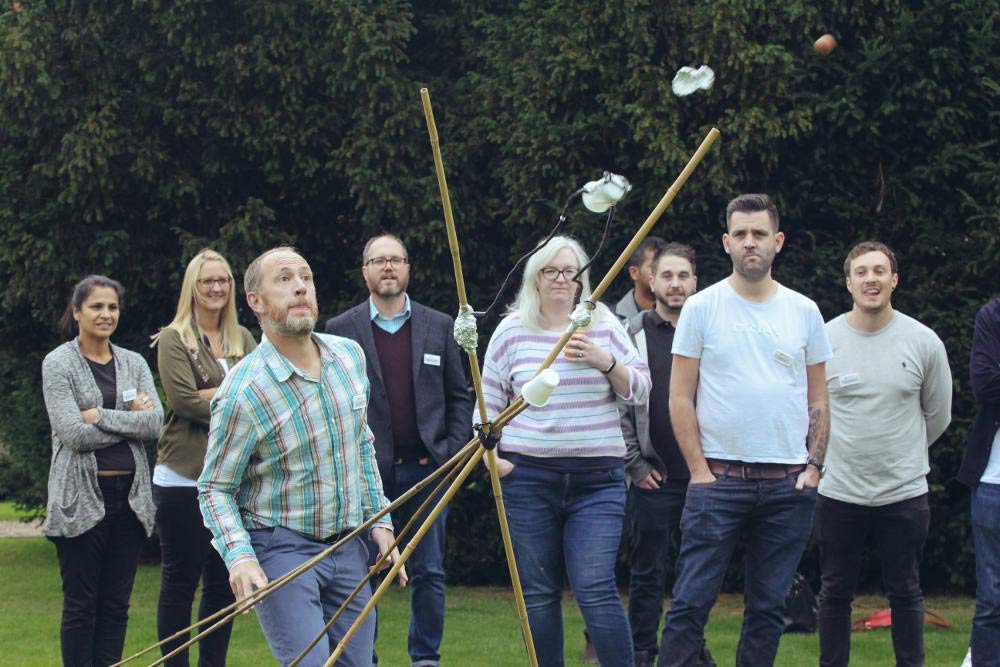
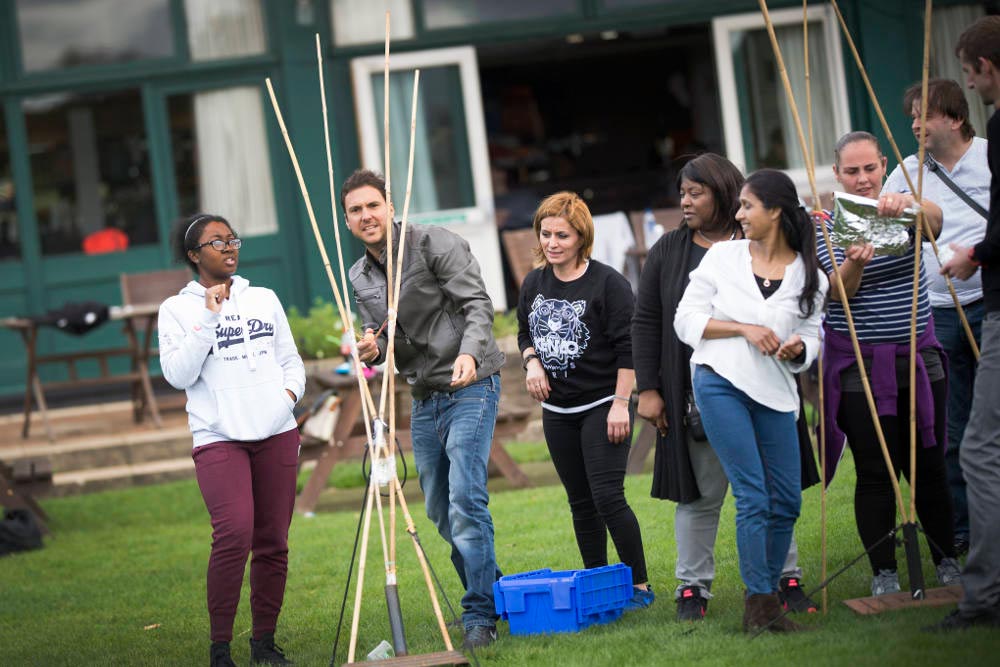
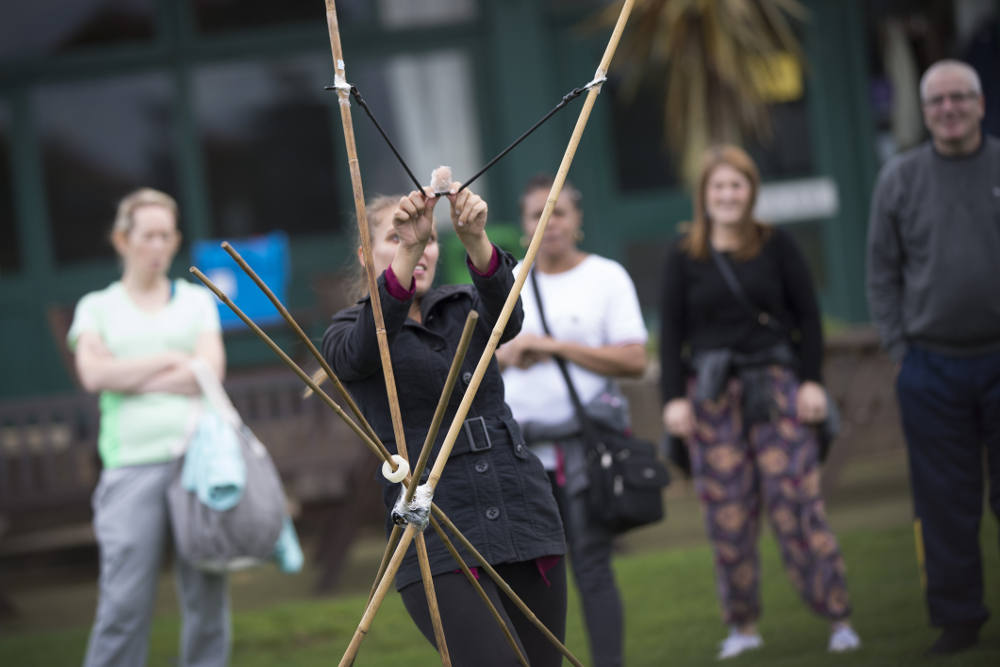
You’re tasked to create a clever contraption to propel an egg as far as possible. You are issued with equipment that includes everything you need to construct a trebuchet or catapult, but you’ll have to think creatively to fling your missile the furthest!
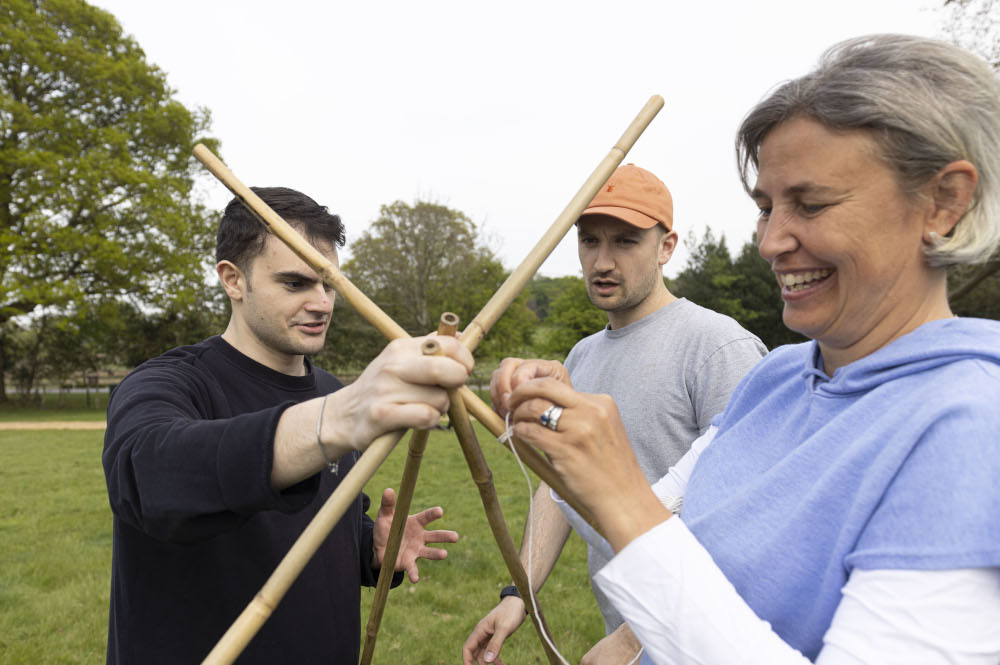
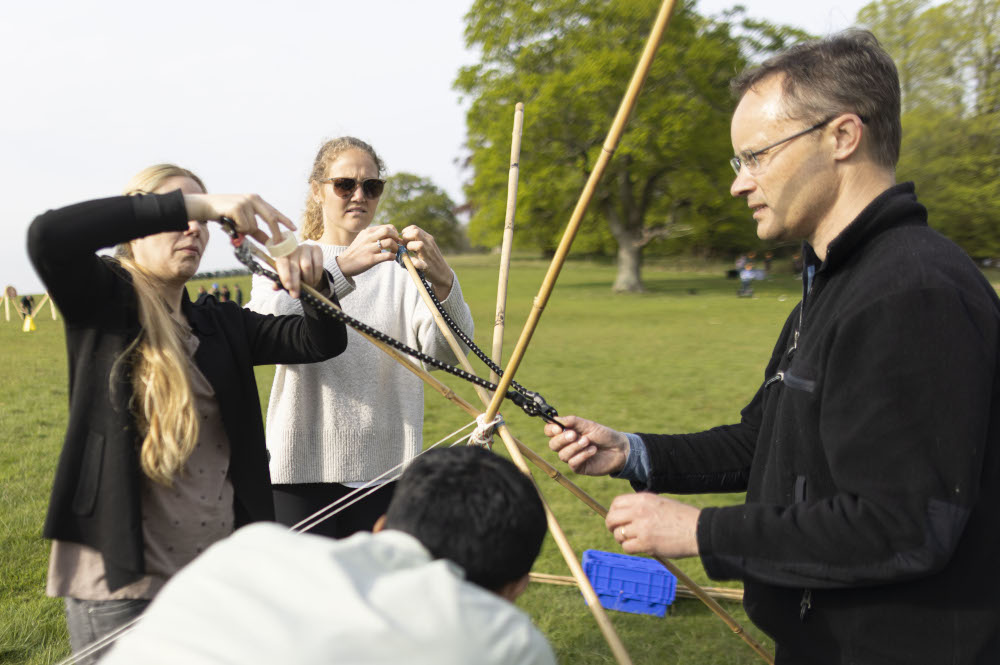
Everyone is given thirty minutes to design and construct their egg tossing contraption. These mighty machines are then lined up for the competition. Teams take turns to open fire, unleashing their eggs, while our eggspert adjudicators measure the distances.
The team whose machine combines power and accuracy to fling eggs the greatest distance in a straight line wins. Brute power is no use if the egg is flung back at the audience!
The winning team receives medals and admiration from the rest of the group. The losers... well they’re just rotten eggs.
About
Event Format
This light hearted icebreaker activity is surprisingly effective for getting your delegates’ brains working and groups bonding together… We find the competition becomes fierce just as with our Rocket Launch event; teams really want to send their eggs the furthest!
This team building icebreaker lasts up to an hour, after which we guarantee your group will have had any cobwebs blown away, be revved up for the conference and certainly won’t be ‘chickening out’ of meetings ahead…
Egg Toss is run in the outside space at the venue of your choice and don’t worry about making a mess, we use bouncy, rubber eggs.
1 of 9
How it works
How does Egg Toss work?
Egg Toss is an outdoor icebreaker for 10 to 500 people, where teams design and build a catapult or trebuchet to fling an egg as far as possible. It lasts up to an hour. Here's how it runs.
-
Get your kit
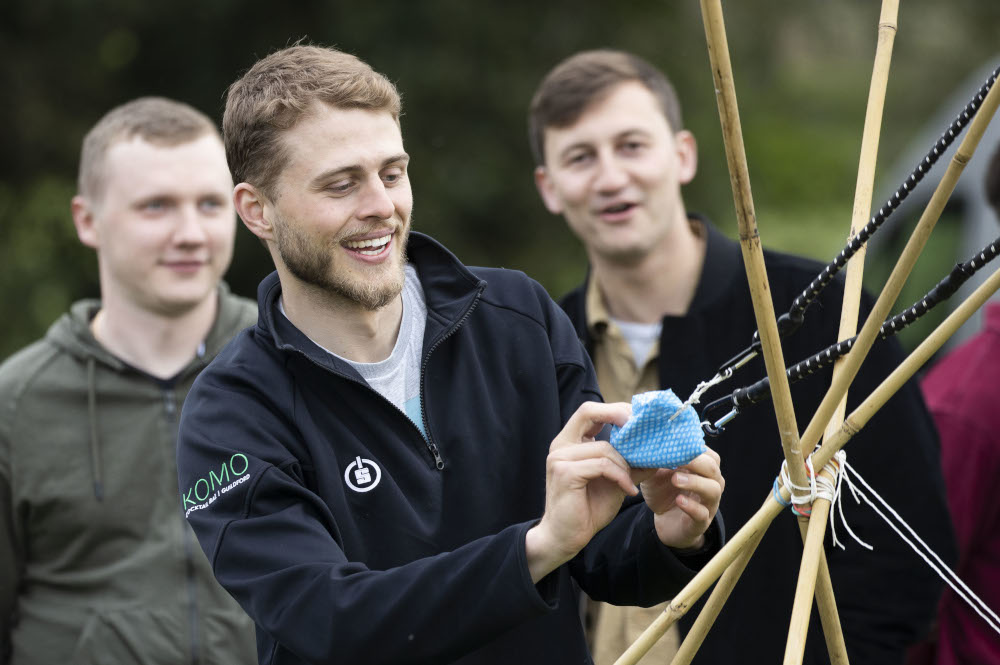
Each team is issued with the equipment to build a trebuchet or catapult, and needs to think creatively to get the most distance.
-
Design and build
Teams have 30 minutes to design and construct their egg-tossing contraption.
-
Open fire
The machines are lined up, and teams take turns to launch their eggs while our adjudicators measure the distances.
-
Crown the winners
The team that combines power and accuracy to fling its egg furthest in a straight line wins medals. We use bouncy rubber eggs, so there's no mess.
What's included
What's included with Egg Toss?
Egg Toss includes everything needed to build and launch.
-
Professional instructor
-
Catapult equipment
-
Event management and instruction
Optional extras
-
+
Event photography or filming
Benefits
What are the benefits of Egg Toss?
Egg Toss is a light-hearted energiser that gets brains working and groups bonding before a conference or meeting.
-

Great fun
Launching eggs across a field is guaranteed to get everyone laughing.
-

Energise
It blows away the cobwebs and revs teams up for the day ahead.
-

Broad appeal
Simple to join in and suitable for groups of up to 500.
-

Team cohesion
Designing and building against the clock gets teams working together fast.

The egg toss was a huge success too and a great surprise – my team was rubbish!!
Pfizer
FAQs
Egg Toss: Frequently Asked Questions
Teams design and construct a device capable of launching an egg as far as possible. The result is a short engineering challenge followed by a competitive outdoor firing range.
No. Participants use the supplied materials to build a catapult or trebuchet-style contraption. Teams need to turn those materials into a reliable launching mechanism before the construction deadline expires.
Teams have approximately 30 minutes to plan and construct their launchers. That limited window forces participants to make decisions quickly rather than endlessly improving an idea that has not yet been tested.
The adjudicators measure each launch, with the winning machine combining distance and accuracy. Raw power is not enough if the egg flies sideways, backwards or towards the watching audience.
No. The event uses bouncy rubber eggs, avoiding unnecessary mess while still giving teams a projectile that can be launched and measured effectively.
The materials required to create the launching devices are supplied. Teams provide the ideas, construction plan and willingness to discover whether their design works outside their imagination.
Yes. The competition requires an appropriate outside space at the chosen venue so the launchers can be lined up and fired safely over a measurable distance.
The complete icebreaker lasts up to approximately one hour. It can provide an active break from a conference without using a large part of the working day.
Egg Toss is suitable for approximately 10 to 500 participants. Larger groups are divided into construction teams before coming together to watch the competitive launches.
The activity rewards quick planning, practical experimentation and sensible delegation. It also reveals whether a team can balance imaginative engineering with the rather important requirement that the device launches in the correct direction.